
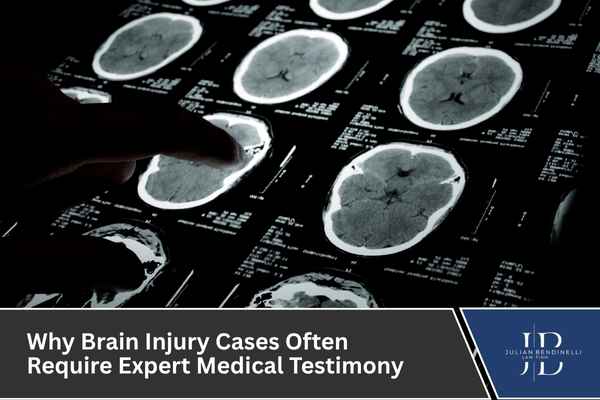
Traumatic brain injuries (TBIs) are among the most complex injuries in personal injury law. Unlike a broken bone or a visible laceration, the effects of a brain injury are often invisible. A person may appear physically healthy while struggling with memory loss, chronic headaches, personality changes, difficulty concentrating, or severe fatigue.
Because these injuries are not always obvious, insurance companies frequently question their severity, cause, or long-term impact.
That is one of the primary reasons expert medical testimony plays such an important role in traumatic brain injury cases.
If you’ve suffered a brain injury because of someone else’s negligence, an experienced traumatic brain injury lawyer Colorado families trust can work with qualified medical professionals to explain how the injury occurred, how it affects your daily life, and what future treatment may be necessary.
At Julian Bendinelli Law Firm, Julian Bendinelli and his team of trial attorneys understand that brain injury claims require far more than medical records alone. They prepare every case with the evidence necessary to clearly demonstrate the full impact of a traumatic brain injury.
Why Brain Injury Cases Are Different
Many personal injury claims involve injuries that can be confirmed through routine imaging or physical examination.
Brain injuries are different.
A person may experience serious cognitive and neurological symptoms even when standard CT scans or MRIs appear normal.
That creates unique challenges.
Insurance companies may argue:
- The injury is not serious.
- Symptoms are exaggerated.
- The accident did not cause the condition.
- The victim should have recovered already.
Expert medical testimony helps explain why these assumptions are often medically incorrect.
What Is Expert Medical Testimony?
Expert medical testimony is evidence provided by qualified medical professionals who have specialized knowledge beyond that of the average person.
These experts help explain complicated medical issues in a way judges, juries, insurance adjusters, and attorneys can understand.
Rather than simply stating that an injury exists, medical experts explain:
- How the injury occurred
- Why symptoms developed
- How the brain functions
- What treatment is necessary
- The expected long-term prognosis
Their opinions help connect complex medical science to the legal issues involved in the case.
Why Medical Records Alone Are Not Always Enough
Medical records document treatment.
Expert testimony explains the significance of that treatment.
For example, a medical record may note:
- Memory problems
- Difficulty concentrating
- Persistent headaches
- Cognitive deficits
An expert can explain:
- Why those symptoms occur
- How they affect daily life
- Whether they are consistent with the accident
- Whether additional treatment is likely
This context is often essential when evaluating damages.
Brain Injuries Often Involve Invisible Symptoms
One of the biggest challenges in traumatic brain injury cases is that many symptoms cannot be seen.
Examples include:
- Memory loss
- Reduced concentration
- Mental fatigue
- Mood changes
- Slower processing speed
- Difficulty solving problems
- Sensory sensitivity
Because these symptoms are invisible, insurance companies sometimes underestimate how significantly they affect a person’s life.
Medical experts help demonstrate that invisible symptoms are still medically legitimate and can substantially limit a person’s ability to work and function.
Neurologists Help Explain Brain Function
Neurologists specialize in conditions affecting the brain and nervous system.
In traumatic brain injury cases, they may explain:
- The nature of the injury
- Neurological symptoms
- Diagnostic findings
- Treatment recommendations
- Long-term prognosis
Their expertise helps establish whether an accident caused the neurological problems the patient is experiencing.
Neuropsychologists Evaluate Cognitive Function
Many traumatic brain injury cases involve neuropsychological evaluations.
Unlike routine medical examinations, these evaluations focus on how the brain performs specific tasks.
Testing may assess:
- Memory
- Attention
- Language
- Executive functioning
- Problem-solving
- Processing speed
- Learning ability
Objective testing can provide important evidence supporting a person’s reported symptoms.
Rehabilitation Specialists Explain Recovery
Recovery from a traumatic brain injury often involves multiple healthcare providers.
Rehabilitation specialists may describe:
- Physical limitations
- Occupational challenges
- Speech difficulties
- Cognitive rehabilitation needs
- Functional improvements
- Ongoing treatment requirements
Their testimony helps explain the practical challenges survivors face during recovery.
Vocational Experts Help Evaluate Employment Limitations
Many brain injury survivors eventually return to work.
Others cannot.
Vocational experts evaluate how cognitive limitations affect employment opportunities.
They may consider:
- Previous work history
- Educational background
- Job requirements
- Physical limitations
- Cognitive abilities
- Transferable skills
Their opinions help explain whether the injury affects future earning capacity.
Life Care Planners Estimate Future Medical Needs
Serious traumatic brain injuries often require lifelong care.
Life care planners evaluate future needs such as:
- Therapy
- Medical equipment
- Prescription medications
- Specialist appointments
- Home modifications
- Personal assistance
These experts help estimate the long-term financial consequences of a catastrophic brain injury.
Economic Experts Calculate Future Financial Losses
Medical care is only one part of a brain injury claim.
Economists may evaluate:
- Future lost wages
- Reduced earning capacity
- Medical expenses
- Inflation
- Future care costs
Their calculations help quantify long-term financial damages.
Why Insurance Companies Often Challenge Expert Opinions
Brain injury claims frequently involve significant damages.
Insurance companies may challenge:
- The diagnosis
- The severity of symptoms
- The need for future treatment
- Employment limitations
- Long-term prognosis
They may also present their own medical experts with differing opinions.
Because of these disputes, selecting well-qualified experts and thoroughly documenting the medical evidence becomes especially important.
Expert Testimony Helps Establish Causation
One of the most important legal issues in any personal injury case is causation.
In other words:
Did the accident actually cause the injury?
Expert medical testimony helps answer that question by explaining:
- The mechanism of injury
- The timing of symptoms
- The relationship between the accident and the diagnosis
- Why alternative explanations may not fit the medical evidence
Establishing causation is often one of the most contested aspects of a traumatic brain injury claim.
Why Expert Testimony Matters Even in Settlement Negotiations
Many people assume expert witnesses become involved only if a case goes to trial.
In reality, expert opinions often influence settlement negotiations long before a courtroom becomes involved.
Insurance companies evaluate:
- Medical documentation
- Expert reports
- Diagnostic testing
- Future medical needs
- Long-term disability
Strong expert evidence often encourages more meaningful settlement discussions because insurers understand how persuasive those opinions may become if litigation proceeds.
Why Trial Preparation Starts Early
Brain injury cases require careful preparation from the beginning.
Medical experts need time to:
- Review records
- Conduct evaluations
- Prepare reports
- Explain future treatment needs
- Evaluate long-term prognosis
That is why Julian Bendinelli and his team of trial attorneys begin preparing every case immediately.
As one of Julian Bendinelli’s approved statements explains:
“Most law firms, sometimes we reference them as settlement mills. They sign up a lot of clients, high volume.”
Preparing cases this way allows the legal team to gather comprehensive medical evidence before important details are lost and ensures expert opinions are supported by complete documentation.
Insurance companies know which attorneys consistently prepare cases for litigation.
Another approved statement reflects the firm’s philosophy:
“One of the things that makes us different is we go to trial.”
Most personal injury attorneys never take traumatic brain injury cases before a jury. Julian Bendinelli and his team of trial attorneys do. That reputation often strengthens settlement negotiations because insurance companies understand the firm is prepared to present persuasive expert testimony if a fair agreement cannot be reached.
How a Traumatic Brain Injury Lawyer Helps Build a Strong Case
Successfully presenting a traumatic brain injury claim requires more than gathering medical bills.
A traumatic brain injury lawyer Colorado families trust can help by:
- Investigating the accident
- Preserving evidence
- Collecting complete medical records
- Coordinating with neurologists and neuropsychologists
- Consulting vocational experts and life care planners
- Documenting future medical expenses
- Evaluating reduced earning capacity
- Negotiating with insurance companies
- Preparing the case for trial when necessary
The objective is to build a comprehensive case that accurately reflects the lifelong consequences of a traumatic brain injury.
Contact Julian Bendinelli Law Firm
Traumatic brain injuries are among the most medically complex personal injury cases, and proving their full impact often requires qualified expert testimony. From explaining invisible cognitive symptoms to evaluating future medical care and lost earning capacity, medical experts play an essential role in helping juries and insurance companies understand the true consequences of a brain injury.
Julian Bendinelli and his team of trial attorneys prepare every traumatic brain injury case with careful attention to medical evidence, expert analysis, and long-term planning. By working with respected specialists and preparing every case as though it may ultimately be presented to a jury, the firm helps clients pursue compensation that reflects the full extent of their injuries.
If you are looking for a traumatic brain injury lawyer Colorado families trust, Julian Bendinelli Law Firm is here to help. Your consultation is free; there is no upfront cost, and you pay no attorney’s fees unless the firm recovers compensation for you.
Schedule your free consultation: https://cotrialattorneys.com/
Disclaimer :
“Nothing in this communication is legal advice. While general principles remain true, you must speak with an attorney to obtain legal advice that is tailored to your specific circumstances.”