Traumatic brain injuries happen in car and truck crashes, motorcycle collisions, falls, and workplace incidents.
Some are diagnosed in the emergency room. Many are not.
The Core Issue
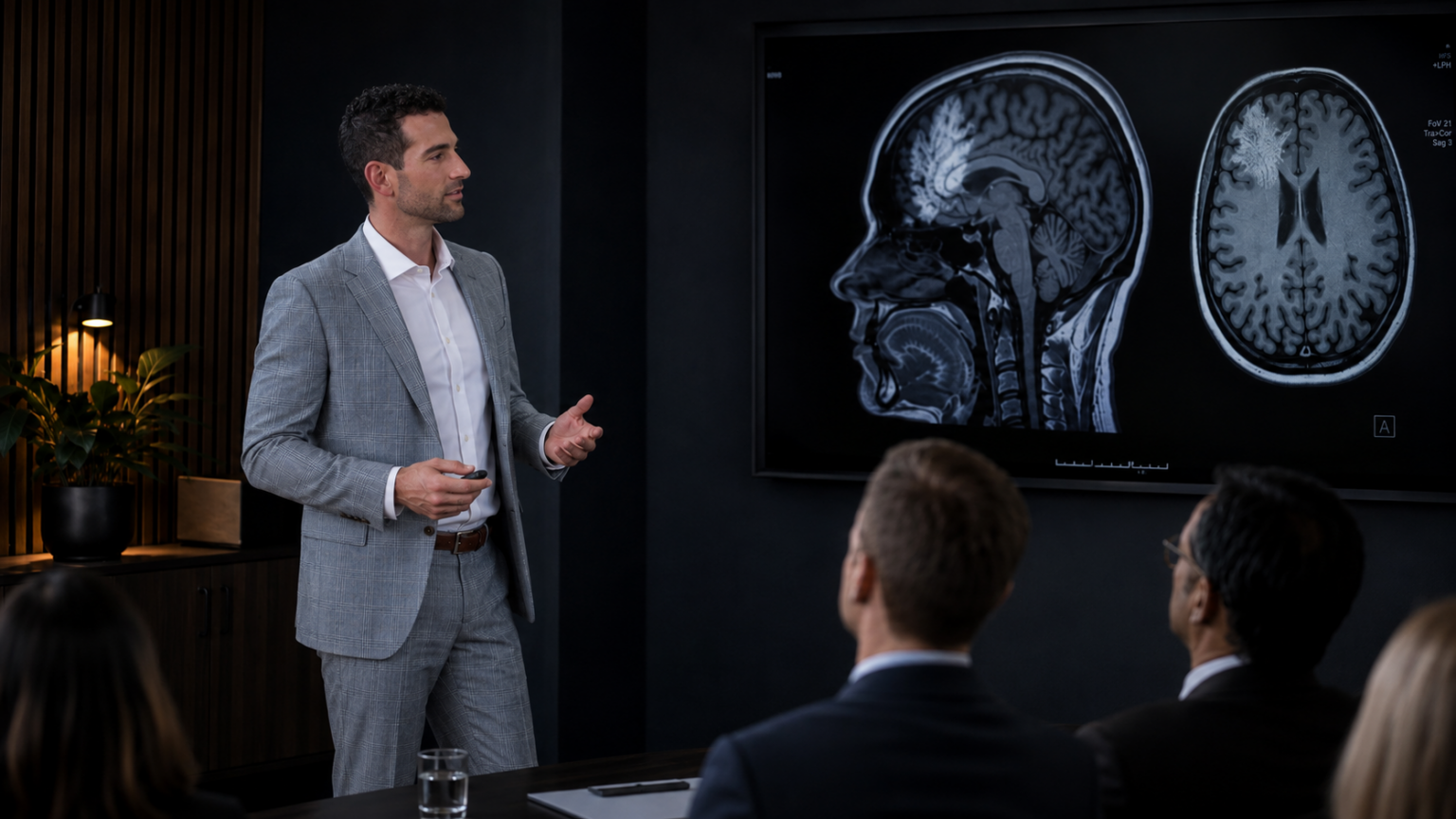
A CT or MRI that reads as normal does not rule out a brain injury. There are many diagnostic tests available to prove whether someone has a brain injury, how bad it is, and to relate the symptoms to the original crash.
We handle these claims by getting the right specialists involved early, using the appropriate diagnostic tools, and documenting the cognitive and behavioral changes the people around you have noticed. You focus on healing; we build the proof.
If you have any kind of brain injury, it belongs on this list.
Concussion and post-concussive syndrome
Moderate and severe TBI
Diffuse axonal injury
Skull fracture and hemorrhage
Anoxic and hypoxic brain injury
Second-impact and repeat injury
We listen to what happened, review the crash records and any imaging already done, and tell you plainly whether it is best for us to work together.
We secure the police report, scene photographs, vehicle data, and witness statements that establish the mechanism and force to your head.
When needed, we can tie the collision forces to the injury through reconstruction and biomechanical engineer experts.
We work with you and your medical providers to help you understand the diagnostic options best tailored for your specific brain injury. The goal is to discover a tailored path to healing, and to prove your claim.
If we are able to get the other person, or the insurance company, to offer fair value for your claim, it may be best to settle your case.
If there is not a fair offer, and it is best for you, we will take your case to trial by jury. This is our reputation, and this is where we fight.
Common Questions
You can. There are many recognized medical guidelines for how to diagnose a brain injury. Loss of consciousness is one of many symptoms that are evaluated. Another is an altered mental state, such as confusion, forgetfulness, brain fog, or memory problems.
For most injury claims arising out of a motor vehicle crash, Colorado gives you three years from the date of the crash. Other injury claims are generally two years. Claims against a government entity carry a much shorter notice deadline of 182 days.
Nothing up front. We work on a contingency fee, which means our fee comes out of a recovery, and if there is no recovery there is no fee.
Delayed onset of symptoms is normal. Get evaluated as soon as you notice changes, and call a brain injury lawyer right away.
An experienced brain injury trial attorney approaches each brain injury case differently, depending on the symptoms the client is suffering from. Whatever your injuries, there is a way to prove the crash caused them.
Yes. Even though an individual case has a low likelihood of going to trial, we prepare every case as if it will. We have a reputation for success at trial across the state and beyond.
Standard imaging is built to find bleeding, fractures, and other structural changes, not the diffuse axonal damage that makes up most brain injuries.
Free Case Evaluation
A trial attorney reviews your case, not a call center. Tell us what happened and we will tell you honestly whether the symptoms you are describing support a claim.
No upfront costs · No fees unless we win · Se habla español