Traumatic Brain Injury (TBI) in Colorado: Symptoms, Care, Evidence & Deadlines

A practical guide to concussions and other TBIs—how to spot symptoms, get the right care, document recovery, and understand Colorado insurance and timelines.

TBI Essentials: Symptoms, Care & Colorado Deadlines

Short answer: A concussion is a type of TBI. Get checked early, keep a simple symptom and activity journal, and save every record. Health coverage (and, after crashes, MedPay or UM/UIM) may help with bills. In Colorado, many motor-vehicle injury claims have 3 years; many other injury claims have 2 years. The 50% rule can reduce or bar recovery if fault is assigned to you.

Key points at a glance:

  • Imaging can be normal and you can still have a TBI.
  • Early evaluation + steady follow-up improve care and documentation.
  • Keep one folder: records, bills, receipts, mileage, work/school notes.
  • For government-related incidents, special notice rules can be shorter.

What Is a TBI?

A traumatic brain injury is a change in how the brain works after a bump, blow, or jolt to the head—or a force to the body that moves the head quickly.

Common types:

  • Concussion (mild TBI): brief confusion or memory issues; loss of consciousness not required.
  • Moderate TBI: longer loss of consciousness or confusion; may show bleeding/bruising on imaging.
  • Severe TBI: extended unconsciousness or memory loss; often requires intensive care and rehab.

Frequent causes:

Symptoms to Watch

Common TBI symptoms:

  • Typical after a TBI
  • Headache, dizziness, nausea
  • Light/noise sensitivity, blurred vision
  • Memory or concentration problems, slowed thinking
  • Balance problems, fatigue, sleep changes
  • Mood changes: anxiety, irritability, low mood

Red-flag symptoms (seek emergency care):

  • Worsening or severe headache • Repeated vomiting
  • Slurred speech, weakness, numbness, or poor coordination
  • Unequal pupils or vision loss • Seizure
  • Loss of consciousness that returns or lasts
  • Increasing confusion or difficulty waking

Children may show persistent crying, refusing to eat, or changes in sleep/play.
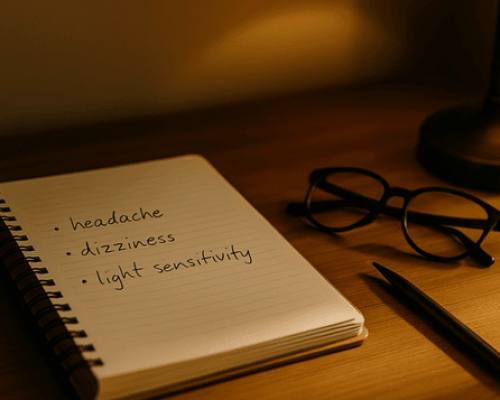
Open symptom journal listing headache, dizziness, and light sensitivity on a sunlit desk
Penlight and reflex hammer on a clinic counter with a clipboard labeled Neuro exam.

How Doctors Evaluate a TBI

  • History & neuro exam: memory, orientation, eye movements, balance, reflexes.
  • Cognitive screening: attention and processing tests.
  • Imaging: CT for acute bleeding; MRI for later questions. Many concussions have normal imaging.
  • Specialists & therapies: neurology, PM&R, vestibular/vision therapy, headache care, cognitive rehab, and—if needed—neuropsychological testing.

Early Care & Recovery Tips

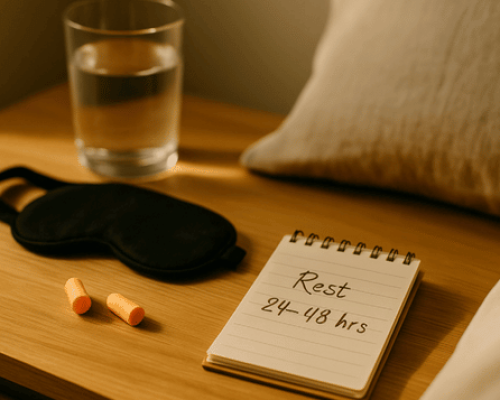
  • First 24–48 hours: relative rest; avoid high-risk activity.
  • Gradual return: step back if symptoms spike; follow provider guidance on work, school, exercise, and driving.
  • Targeted therapies: vestibular (dizziness), vision (convergence), cognitive rehab, sleep and headache management.
  • Prevent a second injury: follow return-to-play/work plans; use seat belts/helmets where appropriate.
Bedside table with water and a note reading Rest 24–48 hours, suggesting early concussion care.
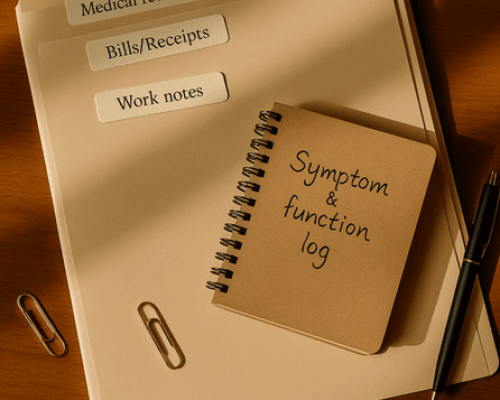
Organized folders for medical records, bills, and work notes beside a symptom and function log.

Documentation That Helps Care—and Your Claim

  • Symptom journal: daily notes on headache level, dizziness, sleep, screen tolerance, and triggers.
  • Function log: missed work/school, reduced hours, help needed at home, mistakes or slowed performance.
  • Record-keeping: discharge papers, imaging reports, therapy plans, prescriptions, bills/receipts, mileage.
  • Work/School notes: ask providers for accommodations (reduced screen time, breaks, quiet space).
  • Insurer communications: report basics; review broad authorizations or recorded statements before agreeing.

Paying for Care in Colorado

  • Health insurance: usually primary for ongoing care; save EOBs and bills.
  • After crashes:
    • MedPay (if on your policy) can pay crash-related medical bills regardless of fault.
    • UM/UIM can help if the other driver is uninsured or underinsured.
  • Keep your Declarations Page handy (policy limits, MedPay, UM/UIM).
Insurance information folder with calculator for Colorado insurance claim planning
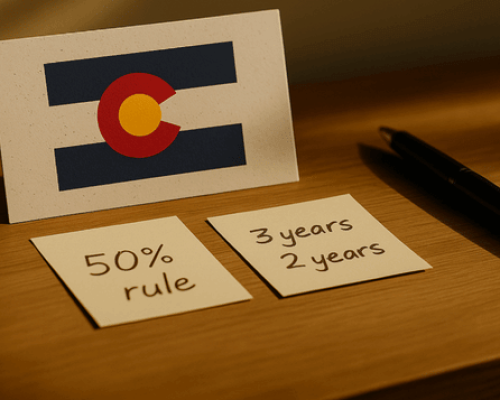
Colorado residency eligibility notes with 50% rule and 2-3 year residency requirements

Colorado Legal Basics

  • Fault system: Colorado is not no-fault. Claims usually go through the at-fault party’s insurer.
  • Comparative negligence (50% rule): If you’re 50% or more at fault, you may not recover; below 50%, recovery is reduced by your share.
  • Deadlines: Many motor-vehicle injury claims: 3 years. Many other injury claims: 2 years. Government-related matters often require earlier written notice.
  • TBI evidence package: consistent medical records, therapy notes, neuropsych testing (when indicated), employer/school documentation, and your journal/logs.

Disclaimer :

“Nothing in this communication is legal advice. While general principles remain true, you must speak with an attorney to obtain legal advice that is tailored to your specific circumstances.”  

FAQs

Yes. Loss of consciousness is not required for a concussion or other TBI.

Possibly. Many concussions do not show on imaging; diagnosis is clinical and symptom-based.

Insurers must offer medical payments coverage. Many policies include it unless you opted out. MedPay can pay certain medical bills regardless of fault.

It helps when the at-fault driver has no or not enough insurance—or can’t be found. Colorado requires insurers to offer UM/UIM; you can reject or lower it in writing.

Often 3 years for motor-vehicle injury claims and 2 years for many other personal-injury claims. Some claims (e.g., certain government entities) have shorter limits. Act promptly.

It varies. Many improve in days to weeks; others need months with targeted therapies. Follow your provider’s plan and track symptoms.

If symptoms persist or affect work/school, ask about neurology, PM&R, vestibular/vision therapy, or neuropsych testing.

Depending on the case, recoverable damages may include medical expenses, lost wages, loss of earning capacity, and non-economic losses (like pain and suffering). Colorado law sets certain limits (caps) that change over time. We update our resources as laws change.

It depends on treatment, liability disputes, insurance reviews, and court timelines. Many cases resolve in negotiation; some require filing or trial. We aim for the right timing for your medical recovery and the facts—not speed at the expense of outcomes.

Colorado often requires written notice within 182 days. This is a short window—act early.

Get Your Free Case Evaluation!

Tell us about your injury. Our trial-tested legal team will review your case and help you understand your options — with no upfront costs and no fees unless we win.

Se habla español.

    Hear From the
    People We've Helped

    See how our experienced team has helped injury victims recover compensation and rebuild after serious accidents — with the personal attention they needed most.